Contaminant Comparison Chart

For a complete list of contaminants that PUR filters reduce, please view our Performance Data Sheets here.


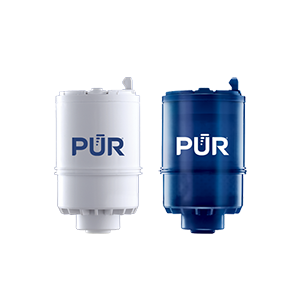
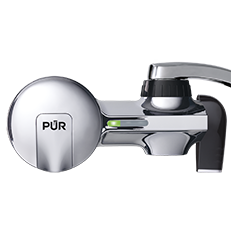
PUR & PUR PLUS FAUCET FILTERS
RF3375/RF9999

View Filters

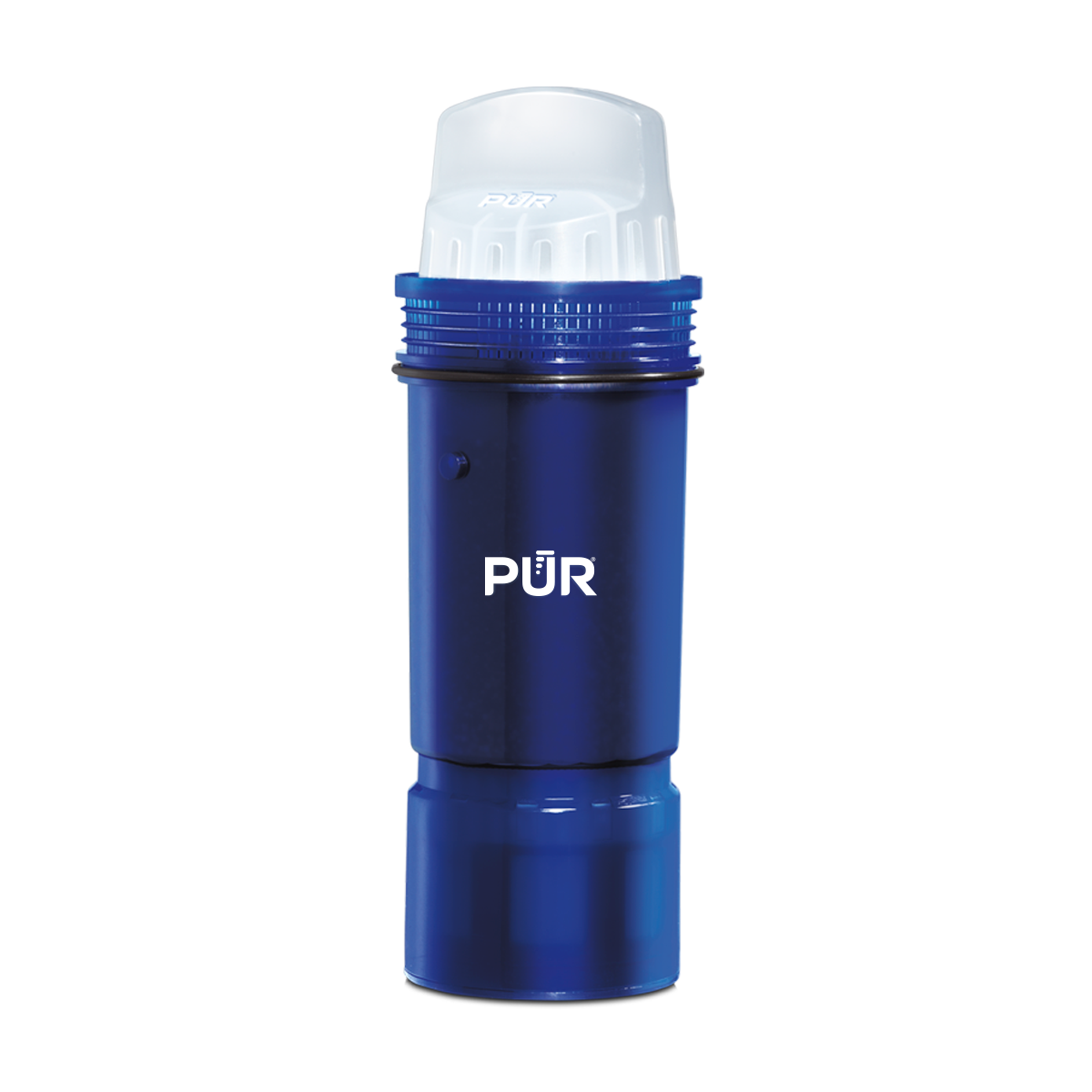
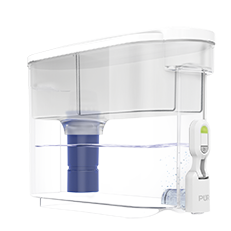
PUR PLUS PITCHER FILTERS
PPF951K

View Filter

PUR BASIC PITCHER FILTERS
PPF900Z

View Filter


Vs. Brita*

Lead
Microplastics
Mercury
Chlorine Taste & Odor
DEET
TTHM

PUR’s Filtration Systems Are Certified By NSF And WQA For Their Contamination Reduction. WQA certifications as of 5/27/21 for Faucet filter models RF-3375 and RF-9999.

¹ Certified to reduce 10X more chemical and physical substances than Brita’s® leading pitcher filter.
² Certified to reduce 3X more chemical and physical substances than Brita’s® leading pitcher filter.
³ Certified to reduce 2X more chemical and physical substances than Brita’s® leading pitcher filter.
*Versus best-selling Brita® pitcher filter OB03. Brita® is a trademark of Brita LP.
**Like other leading brands, PUR does not filter microbes. As of 3/1/23 Brita® and ZeroWater® were not certified to filter microbes. Brita® is a trademark of Brita LP. ZeroWater® is a trademark of Zero Technologies, LLC..
 

PUR & PUR PLUS FAUCET FILTERS


PUR & PUR PLUS FAUCET FILTERS
RF3375/RF9999

View Filters


Vs. Brita*

Lead
Microplastics
Mercury
Chlorine Taste & Odor
DEET
TTHM

PUR’s Filtration Systems Are Certified By NSF And WQA For Their Contamination Reduction. WQA certifications as of 5/27/21 for Faucet filter models RF-3375 and RF-9999.

¹ Certified to reduce 10X more chemical and physical substances than Brita’s® leading pitcher filter.
² Certified to reduce 3X more chemical and physical substances than Brita’s® leading pitcher filter.
³ Certified to reduce 2X more chemical and physical substances than Brita’s® leading pitcher filter.
*Versus best-selling Brita® pitcher filter OB03. Brita® is a trademark of Brita LP.
**Like other leading brands, PUR does not filter microbes. As of 3/1/23 Brita® and ZeroWater® were not certified to filter microbes. Brita® is a trademark of Brita LP. ZeroWater® is a trademark of Zero Technologies, LLC..


PUR PLUS PITCHER FILTERS


PUR PLUS PITCHER FILTERS
PPF951K

View Filter


Vs. Brita*

Lead
Microplastics
Mercury
Chlorine Taste & Odor
DEET
TTHM

PUR’s Filtration Systems Are Certified By NSF And WQA For Their Contamination Reduction. WQA certifications as of 5/27/21 for Faucet filter models RF-3375 and RF-9999.

¹ Certified to reduce 10X more chemical and physical substances than Brita’s® leading pitcher filter.
² Certified to reduce 3X more chemical and physical substances than Brita’s® leading pitcher filter.
³ Certified to reduce 2X more chemical and physical substances than Brita’s® leading pitcher filter.
*Versus best-selling Brita® pitcher filter OB03. Brita® is a trademark of Brita LP.
**Like other leading brands, PUR does not filter microbes. As of 3/1/23 Brita® and ZeroWater® were not certified to filter microbes. Brita® is a trademark of Brita LP. ZeroWater® is a trademark of Zero Technologies, LLC..


PUR BASIC PITCHER FILTERS


PUR BASIC PITCHER FILTERS
PPF900Z

View Filter


Vs. Brita*

Lead
Microplastics
Mercury
Chlorine Taste & Odor
DEET
TTHM

PUR’s Filtration Systems Are Certified By NSF And WQA For Their Contamination Reduction. WQA certifications as of 5/27/21 for Faucet filter models RF-3375 and RF-9999.

¹ Certified to reduce 10X more chemical and physical substances than Brita’s® leading pitcher filter.
² Certified to reduce 3X more chemical and physical substances than Brita’s® leading pitcher filter.
³ Certified to reduce 2X more chemical and physical substances than Brita’s® leading pitcher filter.
*Versus best-selling Brita® pitcher filter OB03. Brita® is a trademark of Brita LP.
**Like other leading brands, PUR does not filter microbes. As of 3/1/23 Brita® and ZeroWater® were not certified to filter microbes. Brita® is a trademark of Brita LP. ZeroWater® is a trademark of Zero Technologies, LLC..


How to Conduct Essential Bitumen Lab Tests for Quality Assurance?

Bitumen is a crucial component in road construction, impacting durability and performance. Quality assurance is essential in ensuring the material meets required standards. Bitumen Lab Tests play a vital role in this process. According to the National Asphalt Pavement Association, nearly 95% of America’s roads are surfaced with asphalt, highlighting the significance of quality in bitumen.

Various tests, like the Penetration Test and the Softening Point Test, help evaluate the bitumen’s properties. These tests determine its viscosity, elasticity, and behavior under different temperatures. A study from the Asphalt Institute states that improper bitumen quality can lead to road failures, increasing costs significantly. Thus, systematic bitumen lab tests are not just beneficial but necessary.

However, the testing process can sometimes be flawed. For instance, human error in sample collection might affect results. Furthermore, relying solely on one type of test can lead to incomplete assessments. Continuous refinement of testing methods and standards is essential for better quality assurance. Understanding these aspects helps enhance the reliability of bitumen lab tests significantly.

How to Conduct Essential Bitumen Lab Tests for Quality Assurance?

Understanding the Importance of Bitumen Quality in Construction Projects

Bitumen quality is crucial in construction projects. It directly influences the durability and performance of roads and pavements. According to industry reports, poor-quality bitumen can reduce the life expectancy of infrastructure by up to 30%. High-quality bitumen provides better adhesion, elasticity, and resistance to temperature fluctuations. These factors play a key role in ensuring that roads withstand heavy traffic and harsh weather conditions.


Ensuring bitumen quality involves rigorous lab tests. Tests such as penetration, softening point, and ductility help in assessing its properties. A study published in the Journal of Materials in Civil Engineering highlighted that nearly 25% of construction delays stem from bitumen-related issues. Inconsistent quality can lead to cracks and surface distress. This not only impacts safety but also increases long-term maintenance costs for cities.


Despite advancements in bitumen testing techniques, some challenges remain. Not all labs adhere to standardized testing protocols, leading to variability in results. Additionally, the lack of skilled professionals in some regions can compromise quality assurance efforts. These aspects highlight the need for continuous training and up-to-date practices in the industry. Quality bitumen is non-negotiable; its significance cannot be overstated in creating safe and lasting infrastructure.

Key Properties of Bitumen Affecting Performance and Durability

Bitumen plays a crucial role in road construction and maintenance. Its properties directly influence the performance and durability of the asphalt. Key factors include viscosity, elasticity, and temperature susceptibility. These traits determine how bitumen performs under different environmental conditions.

Research indicates that bitumen with high elasticity can better withstand temperature fluctuations. A study from the European Asphalt Pavement Association highlights that increasing elasticity can enhance crack resistance by up to 30%. Additionally, viscosity affects how well bitumen adheres to aggregates. Too low a viscosity can lead to instability, while excessive viscosity can hinder proper placement.

The aging of bitumen is another critical aspect. As bitumen ages, it may become brittle, leading to premature cracking. The National Cooperative Highway Research Program found that aged bitumen leads to a 20% increase in maintenance costs within five years. Testing for these properties is essential. Understanding these factors can guide engineers in selecting the right bitumen for specific applications, ensuring quality and durability in road projects.

Key Properties of Bitumen Affecting Performance and Durability

Essential Laboratory Tests for Bitumen: Methods and Standards

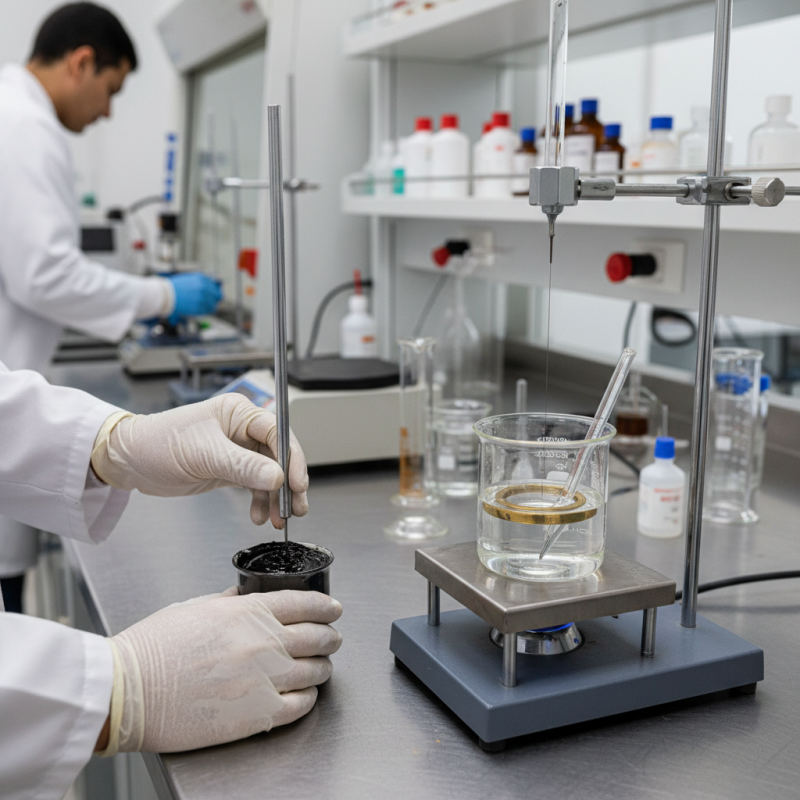
When it comes to ensuring the quality of bitumen, laboratory tests play a crucial role. These tests help assess properties such as viscosity, penetration, and ductility. Common methods include the Penetration Test, which measures the hardness of bitumen. The test uses a standardized needle to determine how deeply it penetrates the sample. It provides essential insights into the material's workability.

Another critical test is the Softening Point Test. This procedure evaluates the temperature at which bitumen becomes fluid. It uses a ring-and-ball method, a widely recognized standard. Accurate softening point values confirm the bitumen's suitability for specific applications. Various factors can influence the results, such as sample temperature and atmospheric conditions.

Quality assurance doesn't stop with testing. Understanding the limitations is vital. Each method has its scope and possible margins of error. In some cases, two tests might yield differing results. This inconsistency demands further investigation. Aligning test results with practical applications can be challenging. A well-rounded approach involving multiple tests often yields the best indication of bitumen quality.

Interpreting Laboratory Results: Quality Control Metrics for Bitumen

Quality control in bitumen testing is crucial for ensuring optimal performance in road construction. Laboratory metrics provide insights into the material’s properties. Important tests include viscosity, penetration, and ductility. When interpreting results, understanding the significance of these metrics is essential for quality assurance.

For instance, the American Society for Testing and Materials (ASTM) standardizes bitumen testing. Viscosity measures flow behavior, impacting workability. A typical range is 100-300 centipoise at 60°C. If viscosity is too low, the material may be too fluid, compromising pavement performance. Additionally, penetration tests reveal hardness. Values between 40-100 are typical. Lower values indicate a harder material, which could be less flexible.

Inconsistent results can signal potential issues. Conducting these tests helps identify the most suitable formulations for different climate conditions. For example, high ductility values indicate better elongation under stress. Measurements below the recommended thresholds may signal a need for reevaluation. It’s evident that rigorous testing is not just a formality, but a necessity for long-lasting infrastructure. Quality assurance cannot rely on assumptions; it demands precise and reliable data.

Implementing Quality Assurance Measures Based on Test Outcomes

Quality assurance in bitumen testing is vital for construction integrity. Implementing measures based on test outcomes ensures high standards. Each lab test provides critical insights. These insights guide decisions on material suitability. When results show deviations, action plans must be in place.

Tracking test results is crucial. Regular reviews help identify trends or issues. If a batch of bitumen fails, investigate the cause. Was it due to a testing error or material quality? Systematic analysis can provide clarity. Engaging experienced personnel can refine this process.

Standard operating procedures should be developed. These procedures should detail how to respond to various results. Continuous training for lab staff also supports these standards. While it’s easy to overlook minor failures, addressing them is key. An initial oversight can lead to larger problems down the line. Prioritizing quality assurance is an investment in future projects.