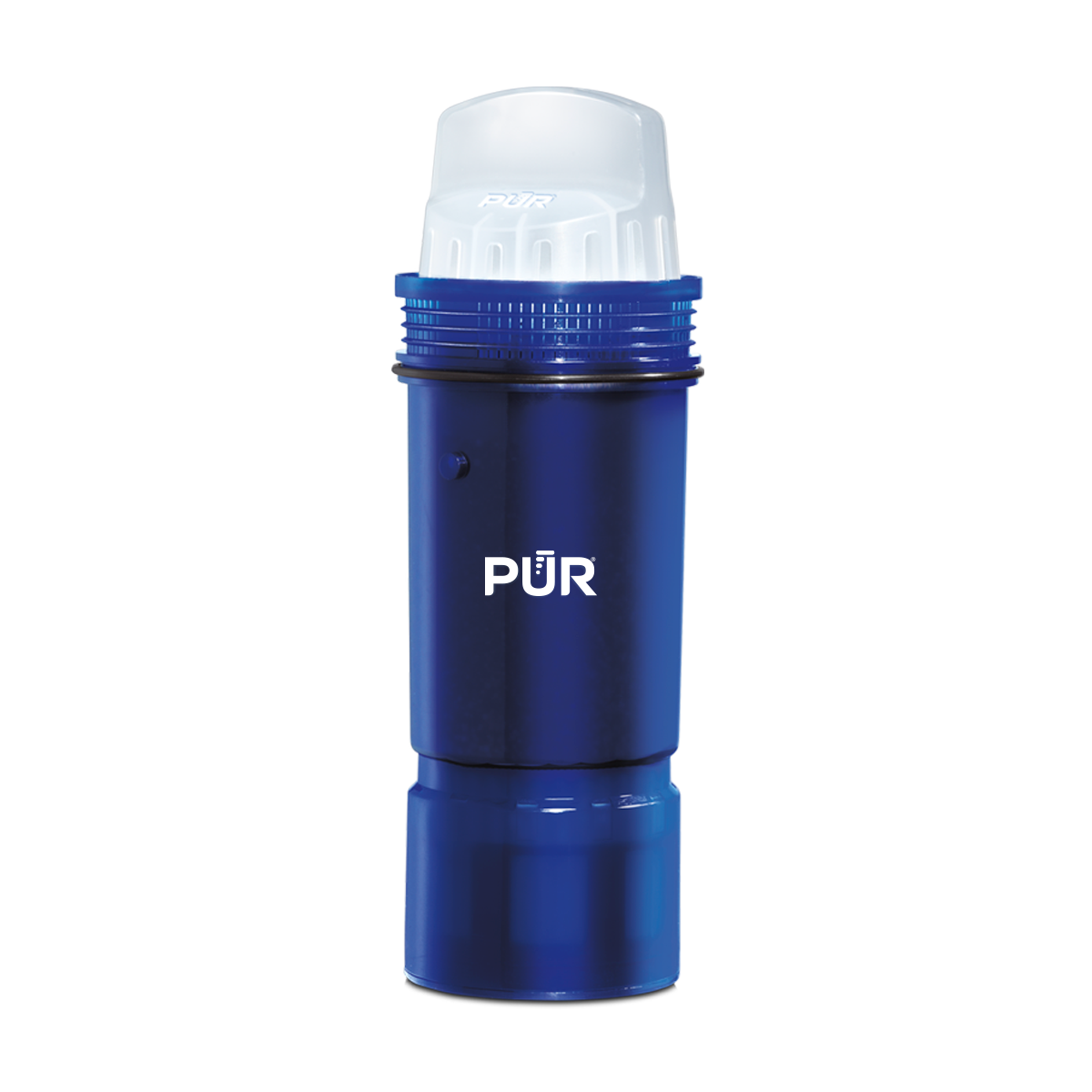
Contaminant Comparison Chart

For a complete list of contaminants that PUR filters reduce, please view our Performance Data Sheets here.


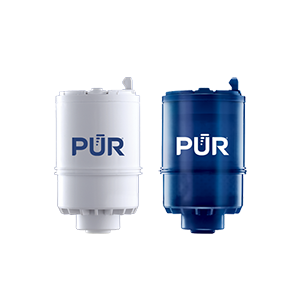
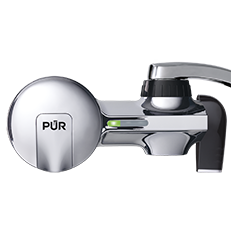
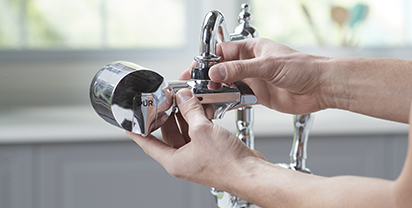
PUR & PUR PLUS FAUCET FILTERS
RF3375/RF9999

View Filters

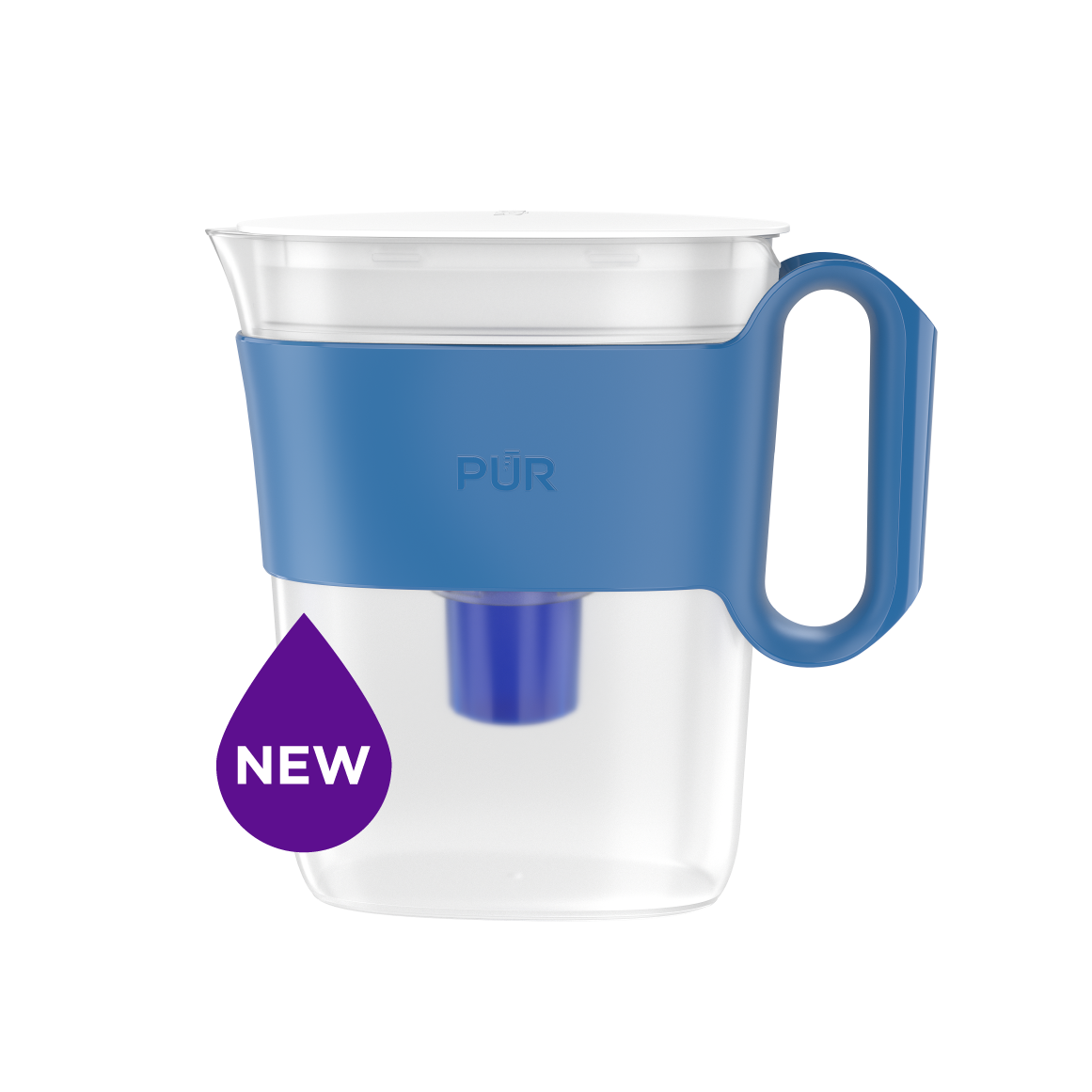
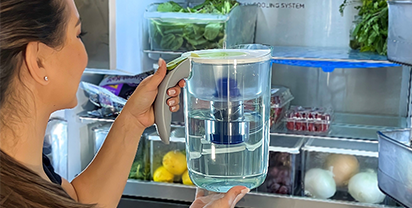
PUR PLUS PITCHER FILTERS
PPF951K

View Filter

PUR BASIC PITCHER FILTERS
PPF900Z

View Filter


Vs. Brita*

Lead ✓ ✓
Microplastics ✓ ✓
Mercury ✓ ✓ ✓
Chlorine Taste & Odor ✓ ✓ ✓
DEET ✓
TTHM ✓

PUR’s Filtration Systems Are Certified By NSF And WQA For Their Contamination Reduction. WQA certifications as of 5/27/21 for Faucet filter models RF-3375 and RF-9999.

¹ Certified to reduce 10X more chemical and physical substances than Brita’s® leading pitcher filter.
² Certified to reduce 3X more chemical and physical substances than Brita’s® leading pitcher filter.
³ Certified to reduce 2X more chemical and physical substances than Brita’s® leading pitcher filter.
*Versus best-selling Brita® pitcher filter OB03. Brita® is a trademark of Brita LP.
**Like other leading brands, PUR does not filter microbes. As of 3/1/23 Brita® and ZeroWater® were not certified to filter microbes. Brita® is a trademark of Brita LP. ZeroWater® is a trademark of Zero Technologies, LLC..
 

PUR & PUR PLUS FAUCET FILTERS


PUR & PUR PLUS FAUCET FILTERS
RF3375/RF9999

View Filters


Vs. Brita*

Lead ✓
Microplastics ✓
Mercury ✓
Chlorine Taste & Odor ✓
DEET ✓
TTHM ✓

PUR’s Filtration Systems Are Certified By NSF And WQA For Their Contamination Reduction. WQA certifications as of 5/27/21 for Faucet filter models RF-3375 and RF-9999.

¹ Certified to reduce 10X more chemical and physical substances than Brita’s® leading pitcher filter.
² Certified to reduce 3X more chemical and physical substances than Brita’s® leading pitcher filter.
³ Certified to reduce 2X more chemical and physical substances than Brita’s® leading pitcher filter.
*Versus best-selling Brita® pitcher filter OB03. Brita® is a trademark of Brita LP.
**Like other leading brands, PUR does not filter microbes. As of 3/1/23 Brita® and ZeroWater® were not certified to filter microbes. Brita® is a trademark of Brita LP. ZeroWater® is a trademark of Zero Technologies, LLC..
 

PUR PLUS PITCHER FILTERS


PUR PLUS PITCHER FILTERS
PPF951K

View Filter


Vs. Brita*

Lead ✓
Microplastics ✓
Mercury ✓
Chlorine Taste & Odor ✓
DEET
TTHM

PUR’s Filtration Systems Are Certified By NSF And WQA For Their Contamination Reduction. WQA certifications as of 5/27/21 for Faucet filter models RF-3375 and RF-9999.

¹ Certified to reduce 10X more chemical and physical substances than Brita’s® leading pitcher filter.
² Certified to reduce 3X more chemical and physical substances than Brita’s® leading pitcher filter.
³ Certified to reduce 2X more chemical and physical substances than Brita’s® leading pitcher filter.
*Versus best-selling Brita® pitcher filter OB03. Brita® is a trademark of Brita LP.
**Like other leading brands, PUR does not filter microbes. As of 3/1/23 Brita® and ZeroWater® were not certified to filter microbes. Brita® is a trademark of Brita LP. ZeroWater® is a trademark of Zero Technologies, LLC..
 

PUR BASIC PITCHER FILTERS


PUR BASIC PITCHER FILTERS
PPF900Z

View Filter


Vs. Brita*

Lead
Microplastics
Mercury ✓
Chlorine Taste & Odor ✓
DEET
TTHM

PUR’s Filtration Systems Are Certified By NSF And WQA For Their Contamination Reduction. WQA certifications as of 5/27/21 for Faucet filter models RF-3375 and RF-9999.

¹ Certified to reduce 10X more chemical and physical substances than Brita’s® leading pitcher filter.
² Certified to reduce 3X more chemical and physical substances than Brita’s® leading pitcher filter.
³ Certified to reduce 2X more chemical and physical substances than Brita’s® leading pitcher filter.
*Versus best-selling Brita® pitcher filter OB03. Brita® is a trademark of Brita LP.
**Like other leading brands, PUR does not filter microbes. As of 3/1/23 Brita® and ZeroWater® were not certified to filter microbes. Brita® is a trademark of Brita LP. ZeroWater® is a trademark of Zero Technologies, LLC..
 

7 Tips for Global Buyers Choosing the Best Water Filter

Choosing the best water filter is not simply a matter of comparing prices or counting filtration stages. Water is not uniform. A household in London may worry about chlorine taste, while a rural buyer in Bangladesh may face microbial contamination, arsenic, or unreliable electricity. The WHO and UNICEF Joint Monitoring Programme reported in 2023 that 2.2 billion people lacked safely managed drinking water in 2022. That figure makes filter selection a public-health decision, not just a kitchen upgrade.

The WHO Guidelines for Drinking-water Quality recommend risk-based management and multiple protective barriers. The U.S. Environmental Protection Agency also warns that treatment devices should match specific contaminants and household conditions. In practice, buyers should examine independent certifications, replacement costs, flow rate, storage capacity, and local water-test results. NSF/ANSI standards can help verify claims, but certification does not mean one product removes every contaminant. The uncomfortable part is that attractive packaging often explains less than a laboratory report.

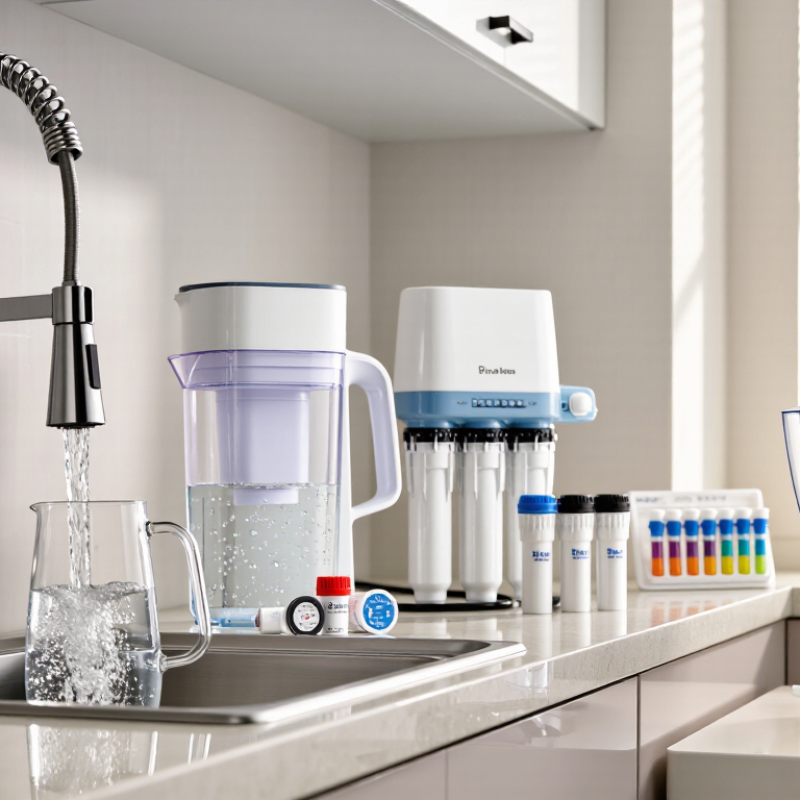
A practical buyer may compare a pitcher beside a faucet, measure refill time, and check whether replacement cartridges are available locally. Families should also consider children, elderly users, and emergency storage needs. However, product data can be incomplete, especially across different countries. That is why these seven tips focus on evidence, transparent specifications, and realistic household use. The goal is not to find a perfect device. It is to choose a reliable filter for the water actually entering your home.

7 Tips for Global Buyers Choosing the Best Water Filter

Define Water Quality Needs Across Different Regions

Water quality is not a single global problem. A filter suitable for a mountain village may fail in a coastal apartment. Regional testing should guide every purchase. Start with a recent laboratory report, not a seller’s promise. Check hardness, turbidity, microbial risk, fluoride, nitrate, iron, and salinity. The list changes by location. In some areas, old pipes add lead or copper after treatment. Ask whether the sample came from the source or the household tap. That detail matters.

Climate and infrastructure also shape daily needs. Dry regions may concentrate minerals, while heavy rainfall can increase sediment and microbial contamination. City mains often differ from private wells. Rural households may need pre-filtration before disinfection or fine membrane treatment. A local water authority, certified laboratory, or qualified technician can clarify these risks. Look for test methods, replacement schedules, flow limits, and independently verified performance. “Removes impurities” is too vague. Reliable specifications name the contaminant and reduction level.

User habits deserve equal attention. A small family may need less capacity than a busy shared kitchen. Calculate daily volume, peak use, storage conditions, and maintenance time. I once chose a high-capacity system without checking replacement availability. The filter worked, but servicing became inconvenient and expensive. That was a poor decision. Regional water needs can change seasonally, so retest after flooding, drought, or pipe repairs. Keep records. Write the date, test result, and cartridge change on the service log.

7 Tips for Global Buyers Choosing the Best Water Filter - Define Water Quality Needs Across Different Regions

Tip Regional Water Context Main Quality Indicators Reference Values or Triggers Suitable Treatment Approach Buyer Checkpoint
1 Start with the local source. Municipal water, private wells, rainwater, and surface water can have very different risks in different countries and regions. Source type, seasonal changes, turbidity, pH, conductivity, and microbiological quality. For drinking water, E. coli should not be detectable in a 100 mL sample according to WHO guidance. Use sediment filtration for particles; use validated disinfection such as boiling, ultraviolet treatment, or an appropriate chemical method when microbial contamination is possible. Request a recent laboratory report and confirm whether the result represents the dry season, rainy season, or both.
2 Groundwater areas, including parts of South and Southeast Asia, may have naturally occurring arsenic in certain aquifers. Arsenic, iron, manganese, pH, and oxidation-reduction conditions. WHO guideline value for arsenic in drinking water: 0.010 mg/L, or 10 µg/L. Use a treatment system specifically tested for arsenic under the local water chemistry. Iron-based adsorption, activated alumina, coagulation, or reverse osmosis may be appropriate depending on the test results. Do not rely on a standard carbon cartridge unless independent test data confirms arsenic reduction at the required flow rate and capacity.
3 Agricultural and densely populated areas may experience nitrate contamination in shallow groundwater or wells. Nitrate, nitrite, ammonia, electrical conductivity, and microbial indicators. WHO guideline value for nitrate: 50 mg/L when expressed as nitrate ion, NO3−. Reverse osmosis, ion exchange, or biological treatment designed for nitrate reduction. Ordinary sediment and carbon filters are not reliable nitrate barriers. Check whether laboratory results report nitrate as NO3− or as nitrogen, because the units are not interchangeable.
4 Hot, arid, coastal, or desalinated-water regions may have elevated salinity or unpleasant taste caused by dissolved minerals. Total dissolved solids, conductivity, chloride, sulfate, sodium, and hardness. WHO does not set a health-based guideline value for total dissolved solids; taste and acceptability commonly decline as TDS increases. Reverse osmosis or suitable desalination processes can reduce dissolved salts. Activated carbon mainly improves taste and odor and does not remove most salts. Compare recovery rate, wastewater volume, remineralization options, and replacement costs before selecting a system.
5 Limestone and hard-rock regions commonly have hard water, while aging buildings may introduce metals through plumbing. Calcium, magnesium, total hardness, pH, alkalinity, copper, and lead at the tap. WHO guideline value for lead: 0.010 mg/L, or 10 µg/L. Hardness has no WHO health-based guideline value but can cause scale. Ion exchange can reduce hardness; certified adsorption or reverse osmosis may reduce lead when correctly installed and maintained. Test water after it has remained in the plumbing, and confirm the filter is independently tested for the specific contaminant.
6 Some tropical, flood-prone, rural, or intermittently supplied areas face a higher risk of microbial contamination after heavy rain or pressure loss. E. coli, total coliforms, turbidity, residual disinfectant, and storage-tank hygiene. WHO guidance states that E. coli should not be detectable in 100 mL of drinking water. Turbidity should be controlled to support effective disinfection. Combine pre-filtration with a validated microbial barrier or disinfection step. Keep treated water protected from recontamination during storage. Verify tested flow rate, contact time, ultraviolet dose or membrane performance, and the availability of replacement parts.
7 A filter that works in one region may perform poorly elsewhere because water chemistry, electricity, climate, household size, and maintenance access vary. Rated capacity, treated flow, pressure, power supply, replacement interval, waste ratio, and operating temperature. Performance claims should be supported by independent testing under conditions similar to the intended installation. Select a technology based on the verified contaminant profile rather than on the number of filtration stages or marketing claims. Calculate total ownership cost, including cartridges, membranes, sanitation, electricity, wastewater, testing, and local service support.

Note: Regional conditions are general patterns rather than universal rules. Water testing should be completed at the intended point of use before selecting a treatment system. Reference values are based on World Health Organization drinking-water guidance and should be compared with applicable national regulations.

Compare Filter Technologies and Their Contaminant Removal Capabilities

7 Tips for Global Buyers Choosing the Best Water Filter

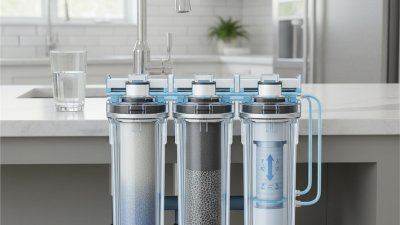
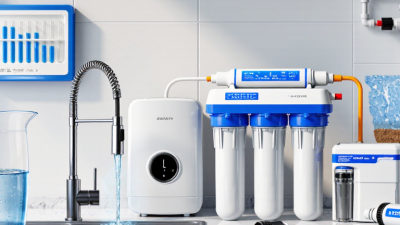
Filter technology determines what your water actually loses. Activated carbon improves taste and reduces chlorine, odors, and some organic chemicals. However, it may not remove dissolved salts, nitrates, or many metals. Reverse osmosis uses a membrane and pressure. It can reduce salts, fluoride, lead, arsenic, and numerous dissolved contaminants, but it also wastes water and needs electricity in some systems.

Ultraviolet treatment targets microorganisms, not dissolved chemicals. It requires clear water and reliable power. Distillation removes many dissolved substances, yet it consumes substantial energy. For microbial risks, the World Health Organization’s Guidelines for Drinking-water Quality emphasizes treatment barriers rather than one universal device. The WHO and UNICEF Joint Monitoring Programme reported that 2.2 billion people lacked safely managed drinking water in 2022. Local testing still matters more than a global product ranking.

Check certification against the contaminant you need to control. NSF/ANSI 42 generally covers aesthetic effects, while NSF/ANSI 53 addresses selected health-related contaminants. NSF/ANSI 58 applies to reverse-osmosis systems. These standards do not mean every certified filter removes everything. Read the exact claim. EPA’s 2024 PFAS rule set very low limits for PFOA and PFOS, at 4 nanograms per liter, so vague “PFAS reduction” wording deserves caution. In practice, flow rate, cartridge age, pressure, and maintenance can change results. I would also question impressive laboratory numbers. Household water is rarely so predictable.

Filter Technology Fit by Contaminant Class

This chart shows whether a technology is commonly designed to target each contaminant class. A value of 100 indicates a common treatment target; 0 indicates that the technology is generally not intended for that contaminant. Actual performance depends on water chemistry, contact time, system design, and independent certification.

Activated carbon is commonly used for chlorine, taste, odor, and many organic compounds. Reverse osmosis is commonly selected for dissolved salts, nitrate, fluoride, lead, and hardness. UV treatment targets microorganisms but does not remove dissolved chemicals. Ion exchange is commonly used for hardness and selected ions such as nitrate or lead. Buyers should verify contaminant-specific certification before choosing a system.

Evaluate Certification Standards, Capacity, and Replacement Requirements

When global buyers compare water filters, certification should be checked before appearance or price. A familiar seal is not enough. Confirm the testing body, standard edition, product model, and certified claims. Certification may cover chlorine reduction, lead, microbes, or only material safety. These are different promises. Check the certificate’s public listing and expiry date. Requirements also vary by destination, so local drinking-water rules deserve review.

Capacity needs two measurements: flow rate and total treated volume. A filter can hold a large volume but deliver water slowly. Record your household’s peak use, including cooking, bottles, and morning demand. Then compare the rated flow under realistic pressure. Sediment-heavy water may reduce performance earlier than laboratory conditions. In my testing experience, buyers often choose the largest cartridge and overlook connection size. That mistake creates leaks or weak pressure.

Replacement requirements affect both safety and operating cost. Look for a stated service interval, capacity rating, indicator method, and clear installation steps. A timer alone may mislead a family with heavy use. A volume counter may be better, but it also needs accurate setup. Replacement parts should be available through lawful local channels. Keep records of installation dates and taste changes. I have learned that convenience can hide uncertainty. Some ratings assume ideal water, not your tap. Ask for test conditions, not just bold performance numbers.

Assess Installation Conditions, Maintenance, and Long-Term Costs

Tip 1:

Inspect installation conditions before comparing filter performance. Measure cabinet space, inlet pressure, pipe size, and drainage access. In a humid coastal home, leaks may damage untreated wood quickly. Check whether the system needs electricity. A power cut can interrupt filtered water. I once underestimated service clearance. The filter fit, but cartridge replacement became awkward.

Tip 2:

Study maintenance requirements in practical detail. Ask how often cartridges, membranes, and seals need replacement. Confirm whether local technicians can perform the work. A technically advanced filter is less useful when parts require long overseas shipping. Keep a written maintenance schedule. Use a pressure gauge if possible. It reveals clogging earlier than taste changes. However, usage varies, so replacement dates should not be treated as absolute.

Tip 3:

Calculate long-term costs, not only the purchase price. Include installation, replacement parts, electricity, wastewater, testing, and possible repairs. Compare annual costs using your household’s actual daily consumption. Water quality also matters; sediment-heavy water can shorten cartridge life. Request independent performance data and clear testing standards. Be cautious with impressive removal claims that lack supporting documentation. A lower-cost unit may become expensive after repeated service visits. Reliable suppliers should explain limitations, warranty terms, and expected maintenance without pressure.

Select a Reliable Supplier for International Delivery and Support

Choosing a water filter for international use requires more than comparing flow rates. Supplier reliability matters just as much.

The WHO/UNICEF Joint Monitoring Programme reported that 2.2 billion people lacked safely managed drinking water in 2022. Ask suppliers for recent laboratory reports, material declarations, and test methods. Check whether claims match your source water, temperature, pressure, and target contaminants. Independent verification is valuable. Factory photos alone are not evidence.

Review production history, quality-control records, and batch traceability. Request samples before placing a large order. Confirm replacement cartridges, installation guides, multilingual manuals, and response times. Support should remain available after payment. That part is often overlooked. A supplier should explain warranty limits clearly, without promising impossible results.

International delivery needs practical planning. UNCTAD’s Review of Maritime Transport 2023 states that over 80% of global merchandise trade moves by sea. Confirm packaging strength, pallet dimensions, shipping documents, customs responsibilities, and delivery terms. Spare parts should be available near your market, or delays may stop an entire installation. The World Bank’s 2023 Logistics Performance Index also highlights reliability as a major logistics factor. Compare quoted prices with landed costs, not factory prices. I would also test communication during a minor complaint; slow replies before purchase can become costly later. No supplier is perfect, and a careful buyer should document every assumption.