Contaminant Comparison Chart

For a complete list of contaminants that PUR filters reduce, please view our Performance Data Sheets here.


PUR & PUR PLUS FAUCET FILTERS
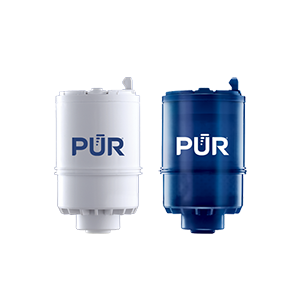
RF3375/RF9999

View Filters

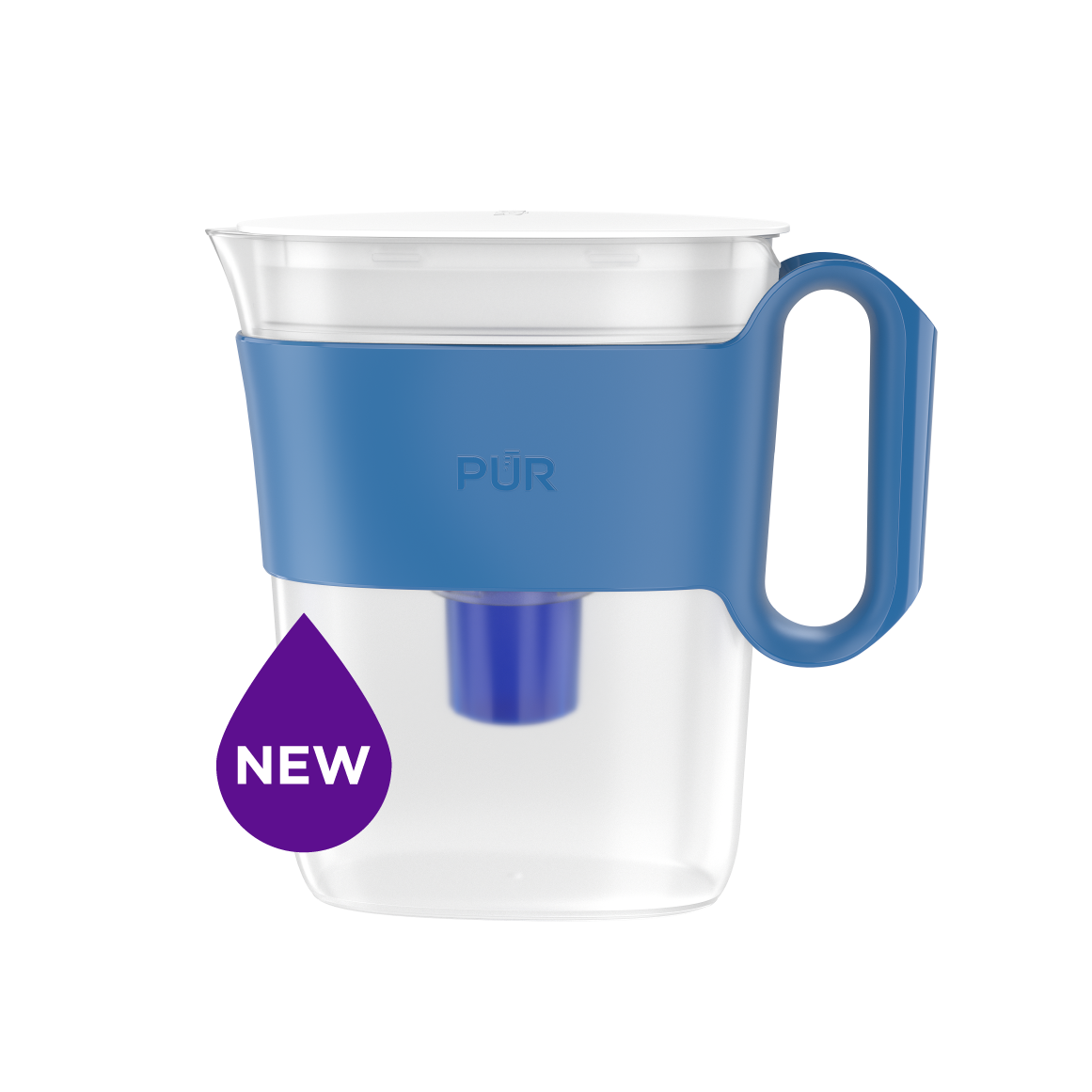
PUR PLUS PITCHER FILTERS
PPF951K

View Filter

PUR BASIC PITCHER FILTERS
PPF900Z

View Filter


Vs. Brita*

Lead
Microplastics
Mercury
Chlorine Taste & Odor
DEET
TTHM

PUR’s Filtration Systems Are Certified By NSF And WQA For Their Contamination Reduction. WQA certifications as of 5/27/21 for Faucet filter models RF-3375 and RF-9999.

¹ Certified to reduce 10X more chemical and physical substances than Brita’s® leading pitcher filter.
² Certified to reduce 3X more chemical and physical substances than Brita’s® leading pitcher filter.
³ Certified to reduce 2X more chemical and physical substances than Brita’s® leading pitcher filter.
*Versus best-selling Brita® pitcher filter OB03. Brita® is a trademark of Brita LP.
**Like other leading brands, PUR does not filter microbes. As of 3/1/23 Brita® and ZeroWater® were not certified to filter microbes. Brita® is a trademark of Brita LP. ZeroWater® is a trademark of Zero Technologies, LLC..
 

PUR & PUR PLUS FAUCET FILTERS


PUR & PUR PLUS FAUCET FILTERS
RF3375/RF9999

View Filters


Vs. Brita*

Lead
Microplastics
Mercury
Chlorine Taste & Odor
DEET
TTHM

PUR’s Filtration Systems Are Certified By NSF And WQA For Their Contamination Reduction. WQA certifications as of 5/27/21 for Faucet filter models RF-3375 and RF-9999.

¹ Certified to reduce 10X more chemical and physical substances than Brita’s® leading pitcher filter.
² Certified to reduce 3X more chemical and physical substances than Brita’s® leading pitcher filter.
³ Certified to reduce 2X more chemical and physical substances than Brita’s® leading pitcher filter.
*Versus best-selling Brita® pitcher filter OB03. Brita® is a trademark of Brita LP.
**Like other leading brands, PUR does not filter microbes. As of 3/1/23 Brita® and ZeroWater® were not certified to filter microbes. Brita® is a trademark of Brita LP. ZeroWater® is a trademark of Zero Technologies, LLC..
 

PUR PLUS PITCHER FILTERS


PUR PLUS PITCHER FILTERS
PPF951K

View Filter


Vs. Brita*

Lead
Microplastics
Mercury
Chlorine Taste & Odor
DEET
TTHM

PUR’s Filtration Systems Are Certified By NSF And WQA For Their Contamination Reduction. WQA certifications as of 5/27/21 for Faucet filter models RF-3375 and RF-9999.

¹ Certified to reduce 10X more chemical and physical substances than Brita’s® leading pitcher filter.
² Certified to reduce 3X more chemical and physical substances than Brita’s® leading pitcher filter.
³ Certified to reduce 2X more chemical and physical substances than Brita’s® leading pitcher filter.
*Versus best-selling Brita® pitcher filter OB03. Brita® is a trademark of Brita LP.
**Like other leading brands, PUR does not filter microbes. As of 3/1/23 Brita® and ZeroWater® were not certified to filter microbes. Brita® is a trademark of Brita LP. ZeroWater® is a trademark of Zero Technologies, LLC..

 

PUR BASIC PITCHER FILTERS


PUR BASIC PITCHER FILTERS
PPF900Z

View Filter


Vs. Brita*

Lead
Microplastics
Mercury
Chlorine Taste & Odor
DEET
TTHM

PUR’s Filtration Systems Are Certified By NSF And WQA For Their Contamination Reduction. WQA certifications as of 5/27/21 for Faucet filter models RF-3375 and RF-9999.

¹ Certified to reduce 10X more chemical and physical substances than Brita’s® leading pitcher filter.
² Certified to reduce 3X more chemical and physical substances than Brita’s® leading pitcher filter.
³ Certified to reduce 2X more chemical and physical substances than Brita’s® leading pitcher filter.
*Versus best-selling Brita® pitcher filter OB03. Brita® is a trademark of Brita LP.
**Like other leading brands, PUR does not filter microbes. As of 3/1/23 Brita® and ZeroWater® were not certified to filter microbes. Brita® is a trademark of Brita LP. ZeroWater® is a trademark of Zero Technologies, LLC..
 

2026 Top House Water Filter Options for Clean Drinking Water?

Ensuring access to clean drinking water is crucial for health. A house water filter significantly improves water quality. According to the Environmental Protection Agency (EPA), contaminants in drinking water can cause serious health issues. In fact, nearly 1 in 10 Americans drink tap water that violates federal health standards.

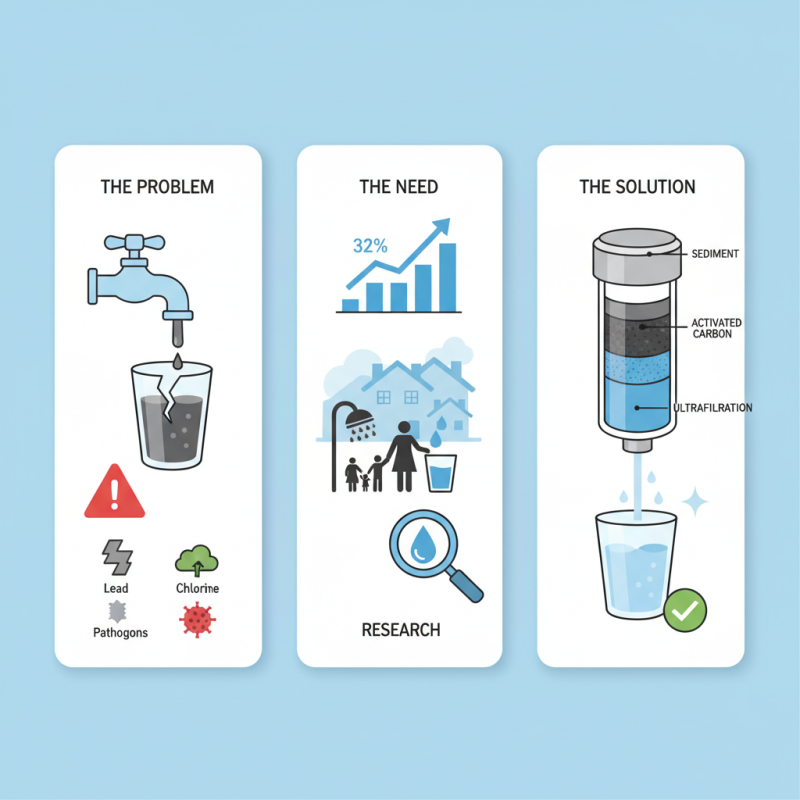
With the growing concern over water quality, choosing the right home filtration system is vital. Many households face challenges from chlorine, lead, and pathogens. A reliable house water filter tackles these problems, providing safe water for families. The market is flooded with options, making selection daunting. Data from industry reports show that sales of water filtration systems have increased by 32% over the past five years, indicating rising consumer awareness.

However, not all filters are created equal. Some may fail to remove harmful substances effectively. It's essential to research and understand specific filtration needs. Evaluating how filters work can prevent costly mistakes. Failing to select the right house water filter might lead to continued exposure to unwanted contaminants, which is a concern every homeowner should address.

2026 Top House Water Filter Options for Clean Drinking Water?

2026 House Water Filter Market Overview: Trends and Projections

As we approach 2026, the house water filter market is evolving rapidly. Recent industry reports suggest a projected growth of 8% annually, fueled by rising health consciousness. Consumers increasingly prioritize clean drinking water, leading to diverse filter options. A heavy reliance on online reviews underscores the importance of trusted sources.

Sustainability trends are also shaping the market. Filters that minimize plastic waste are gaining traction. According to a 2023 survey, over 70% of consumers prefer products with eco-friendly features. However, there are challenges. Many filters still fall short in efficiency. Some designs do not effectively remove contaminants, raising questions about consumer trust.

Awareness around water quality is critical. An alarming statistic reveals that nearly 40% of households remain unaware of local water contaminants. Transparency in filter performance is essential. Consumers need clear data to make informed choices. The market must address these gaps to foster trust and enhance product reliability.

2026 Top House Water Filter Options for Clean Drinking Water

Filter Type Filtration Method Contaminants Removed Estimated Cost (USD) Lifespan (Months)
Activated Carbon Absorption Chlorine, VOCs, Taste & Odor $50 - $150 6 - 12
Reverse Osmosis Membrane Filtration Lead, Nitrates, Fluoride, Arsenic $200 - $600 24 - 36
UV Purification Ultraviolet Light Bacteria, Viruses $100 - $300 12 - 24
Salt-Based Softener Ion Exchange Hard Minerals (Calcium, Magnesium) $300 - $700 5 - 10
Whole House Filters Multi-Stage Sediment, Chlorine, Heavy Metals $500 - $1,500 36 - 60

Key Contaminants in Drinking Water: The Need for Effective Filtration

2026 Top House Water Filter Options for Clean Drinking Water?

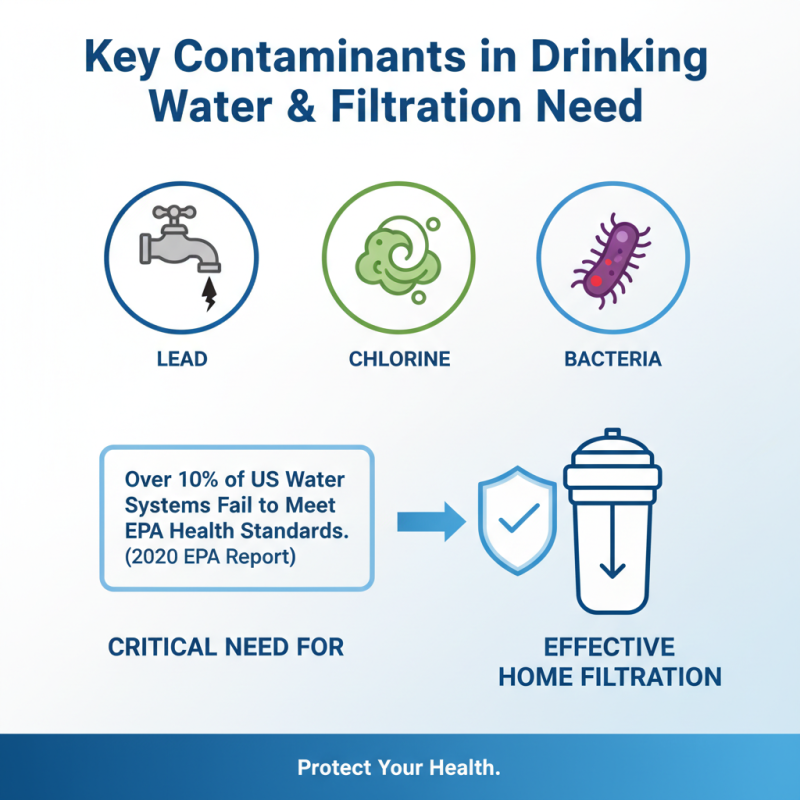
Drinking water can be contaminated with a variety of harmful substances. Key contaminants include lead, chlorine, and bacteria. A 2020 report by the Environmental Protection Agency (EPA) indicated that over 10% of U.S. water systems do not meet federal health standards. This highlights the critical need for effective filtration systems in homes.

Lead, often from old pipes, poses significant health risks. Studies show that even low levels of lead can affect brain development in children. Chlorine, a common disinfectant, can create harmful byproducts. These byproducts have been linked to long-term health issues, including cancer. Furthermore, bacteria and viruses can also enter water supplies, especially after heavy rains. Filters that effectively remove these contaminants are crucial for ensuring safe drinking water.

Choosing the right filtration system can be challenging. Many options claim to remove various contaminants, but not all are equally effective. A study from the National Sanitation Foundation (NSF) revealed that only 30% of home filters meet rigorous standards. Consumers should look for filters that have been independently tested. Understanding your local water quality can also guide you in selecting the best system. It’s essential to stay informed and choose wisely for the sake of your health.

Comparative Analysis of Top Water Filter Technologies: Pros and Cons

When choosing a water filter, homeowners face many options. Understanding the pros and cons of each technology is crucial. Activated carbon filters effectively remove chlorine and odors. However, they may not eliminate heavy metals. This can be a significant drawback for families concerned about contaminants.

Reverse osmosis systems provide thorough filtration. They can remove up to 99% of impurities. Yet, these systems often waste water during the filtration process. Homeowners may find the maintenance costs higher than traditional filters. Furthermore, some users report that water can taste flat or devoid of minerals.

UV filters utilize ultraviolet light to kill bacteria and viruses. This technology is reliable but does not remove chemicals or sediment. Users must ensure pre-filtration occurs for the best results. Each technology has unique strengths and weaknesses. Homeowners should assess their specific needs when selecting a water filtration solution.

Consumer Ratings and Reviews: Which Water Filters Are Most Effective?

When it comes to selecting a water filter, consumer ratings and reviews play a crucial role. Many households have shared their experiences with various filters. Some praise the taste and clarity of the water, while others express frustration over maintenance issues. These insights help new buyers make informed decisions.

Many consumers emphasize the importance of performance. Filters that effectively remove contaminants receive high ratings. However, some users report that certain models underperform in specific areas. For example, while a filter may excel at removing chlorine, it might not address heavy metals. This inconsistency highlights the need for thorough research before purchasing.

It’s also important to consider user-friendliness. Many reviews mention the hassle of installation and filter replacement. Some filters are easy to set up, while others can be cumbersome. Consumers often wish for clearer guidelines on how to maintain their systems. This feedback reveals that not all filters are created equal, making careful consideration essential for the best drinking water experience.

2026 Top House Water Filter Options for Clean Drinking Water

This chart illustrates the effectiveness of various water filter options based on consumer ratings from 1 to 5, with 5 being the most effective.

Cost-Benefit Analysis of Investing in a House Water Filter System

2026 Top House Water Filter Options for Clean Drinking Water?

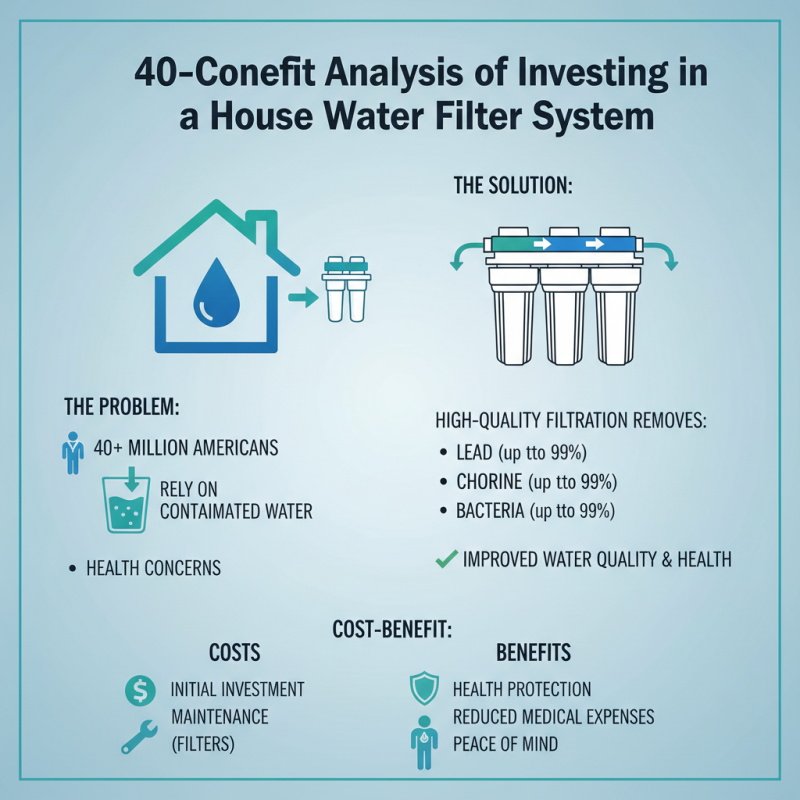
Investing in a house water filter system is becoming more common. A recent study indicates that over 40 million people in the U.S. rely on contaminated water. This raises concerns about water quality and health. A good filtration system can effectively remove contaminants like lead, chlorine, and bacteria. Studies show that a high-quality filter can reduce these harmful substances by up to 99%.

Costs associated with water filtration systems can vary greatly. A simple pitcher filter may cost around $30, while a whole-house system can exceed $1,000. However, considering potential health costs from contaminated water, investing in a filter offers significant savings. A 2022 report found that untreated water can lead to long-term health expenses averaging $1,200 annually for families. Therefore, upfront investments in filtration can be cost-effective.

Tip: Regular maintenance of your filter system is crucial. Research indicates that filters lose efficiency over time, necessitating periodic replacement.

Another consideration is the environmental impact. Bottled water generates a substantial amount of plastic waste. By using a filtration system, families can reduce their plastic footprint. However, it is essential to assess your specific needs and local water quality. Not all systems address every contaminant, so consumers must remain informed.